When this service may be useful
A desk study helps identify whether historic or current uses could create contamination risks for a proposed development. It is an initial evidence stage that can inform the need for intrusive investigations.

Water & ground
An initial appraisal of potential land contamination risks and further investigation needs.
A desk study helps identify whether historic or current uses could create contamination risks for a proposed development. It is an initial evidence stage that can inform the need for intrusive investigations.
Specialist input reviews available site history, environmental information and potential pathways between contamination sources and sensitive receptors. The report records the evidence, limitations and areas requiring further assessment.
You receive an initial risk appraisal and recommendations for the next stage. A desktop study cannot confirm all ground conditions; sampling, investigation and remediation advice are separate tasks where required.
Site address, proposed use and available site history.
We review the site, proposal and planning stage to agree the appropriate scope. Specialist surveys and assessments are coordinated where needed.
How our planning consultancy process worksILLUSTRATIVE REPORT PREVIEW
Front cover and contents page examples. The document structure is tailored to your instruction, site and relevant planning requirements.
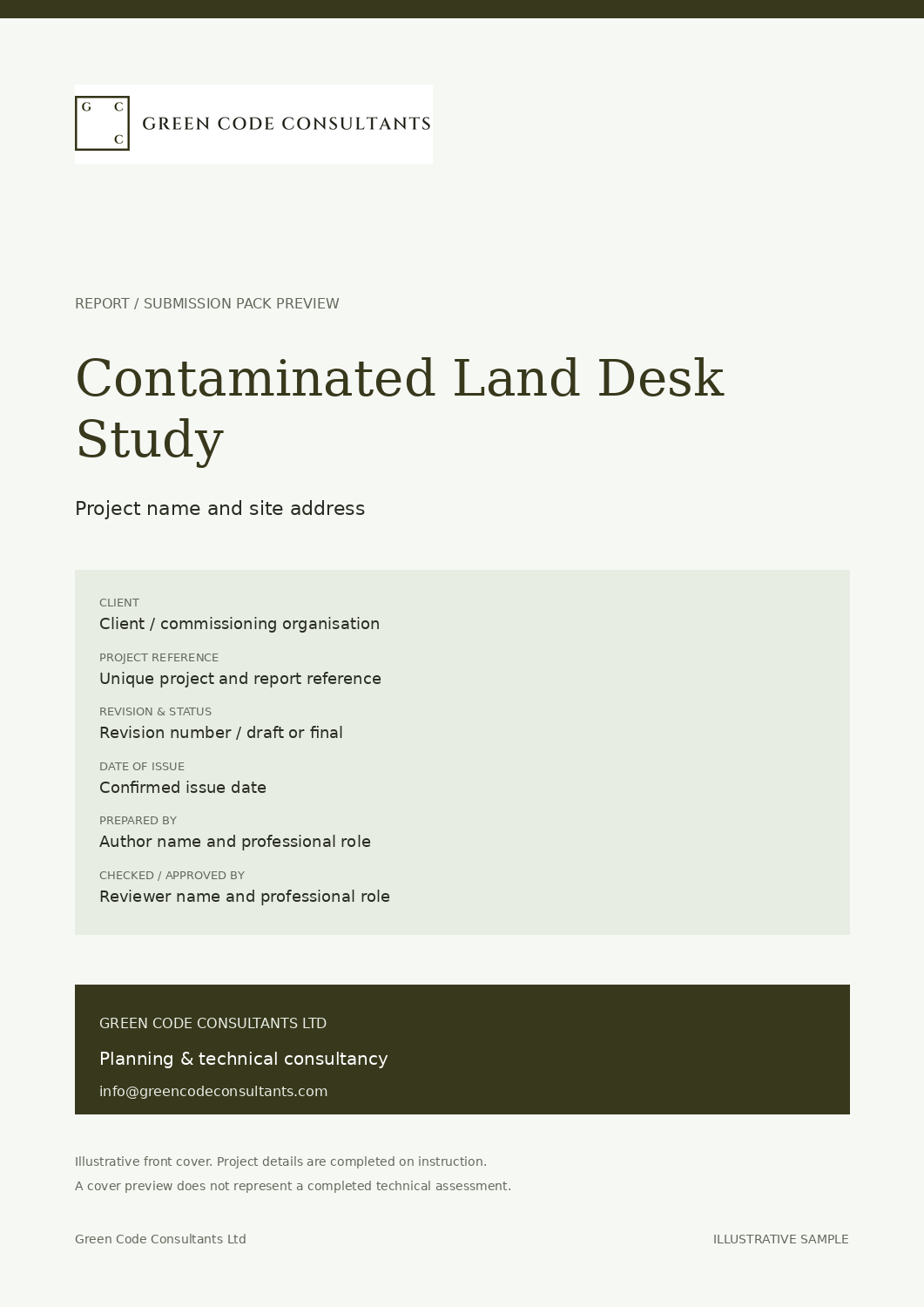
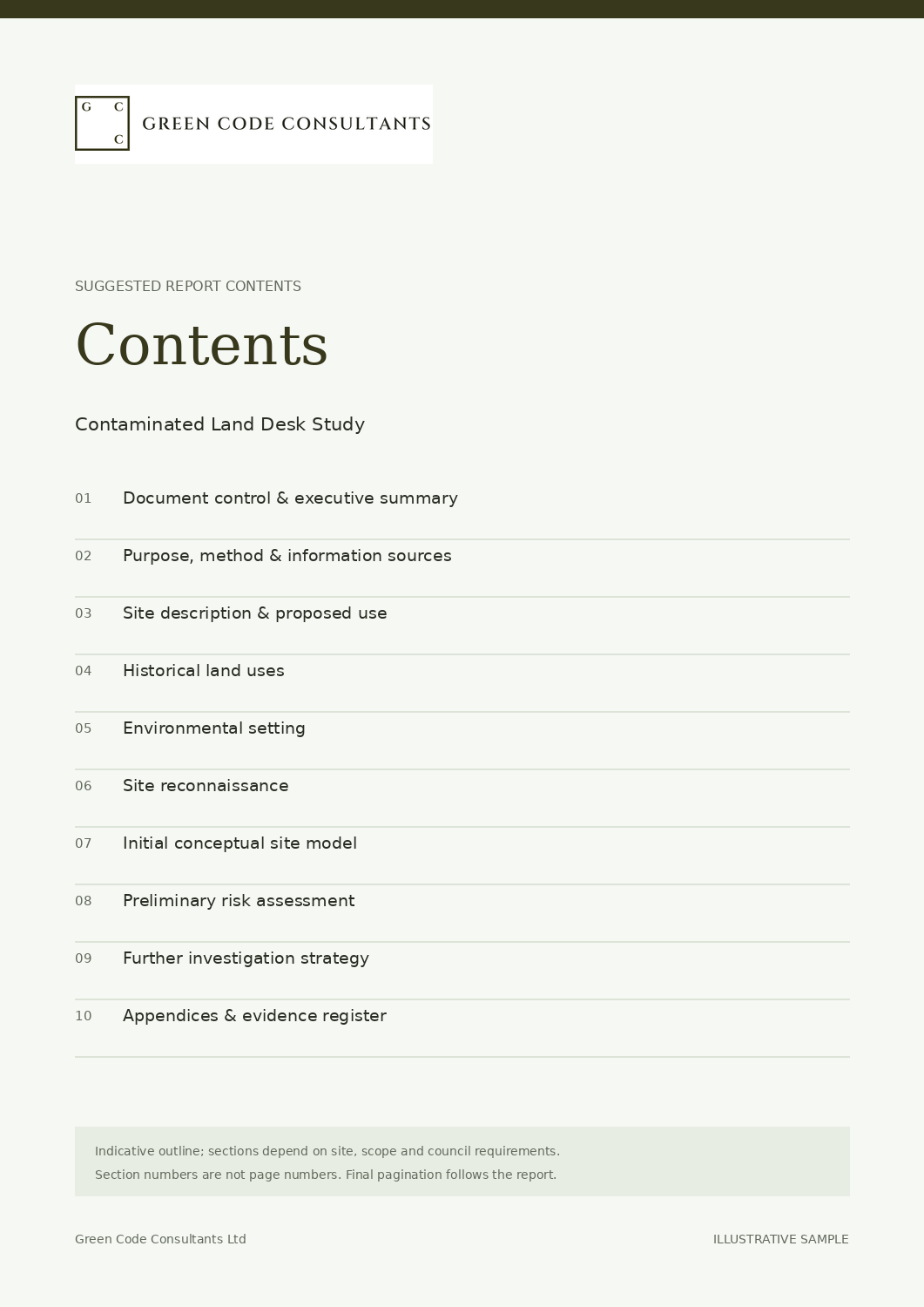
This outline explains the purpose of each section. The final contents depend on the agreed scope, available evidence and requirements of the local planning authority.
Project details, reference, revision, date, author, reviewer and a concise summary of the key findings.
Define the preliminary assessment scope and data limitations.
Describe current conditions, receptors and the development proposal.
Review maps, records and potentially contaminative site or neighbouring uses.
Review geology, groundwater, surface water and relevant environmental records.
Record observations from a walkover where included in the scope.
Identify potential sources, pathways, receptors and contaminant linkages.
Evaluate potentially unacceptable risks and uncertainty.
Recommend investigations or other next steps; desk study does not certify remediation.
Index relevant plans, photographs, calculations, surveys and source documents; include only the evidence relevant to this instruction.
Read our planning supporting documents guide to explore related evidence.
YOUR QUESTIONS ANSWERED
Clear answers to help you plan your next step.
Still have a question?
Tell us about the site and we will confirm what is needed and what it should cost.
Make an enquiryNo. It reviews available evidence and identifies potential risks and investigation needs. Ground sampling, testing and remediation advice are separate tasks where the findings indicate they are needed.
Site address, proposed use and available site history.
The price shown is a starting estimate for the stated scope. We review the site, proposal, available information and required deliverables, then confirm the fee, exclusions and programme in a written quotation before appointment.
We bring the relevant planning consultants and specialist providers into a coordinated project team. They work from an agreed brief and current proposal, with dependencies and design changes discussed across disciplines. Each consultant remains responsible for their own professional advice and agreed deliverables.
PART OF A COORDINATED APPOINTMENT
This service can form part of a wider coordinated planning appointment. We bring the relevant consultants together to work alongside your design team, discuss assessment findings and identify how recommendations affect other reports and the proposal.
Your fee proposal confirms who prepares each document, the information it relies on and the limits of the instruction. A report provides evidence for the council’s assessment; the planning decision remains the council’s. Explore how our consultants work together or discuss the team your project needs.
YOUR NEXT STEP
Tell us about the site, what you want to achieve and any deadline. We will review it and suggest an appropriate next step.
Call 020 8004 4464 or email info@greencodeconsultants.com.